Skill Enhancement Program
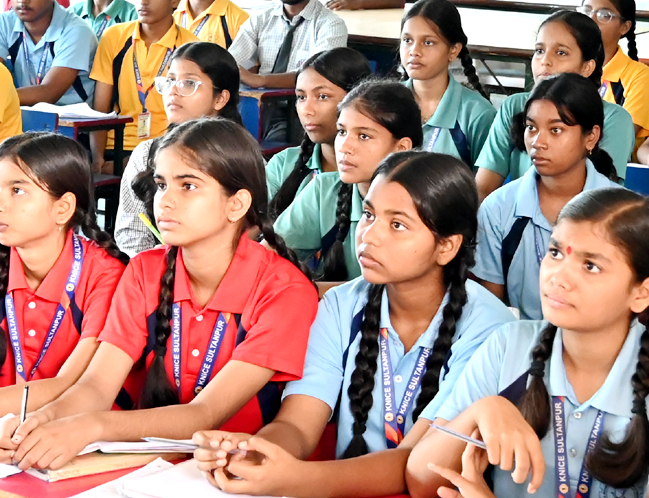
Skill Enhancement Program are planned after-school courses where students can obtain advanced academic guidance, receive additional assistance with assignments, or explore new hobbies, interests, and activities beyond the classroom environment.
Students are motivated to experiment with new activities, pursue hobbies, and develop skills beyond the classroom via Skill Enhancement Program. Activities may include Sports, Fashion design, Drawing, and Coding.
The Skill Enhancement Program do not have grades, allowing students to make errors and learn from those experiences. Consequently, this will enhance students’ self-assurance as they acquire new abilities and engage in different experiences.
We emphasize collaboration and teamwork since our programs frequently unite students from various backgrounds and age ranges. Consequently, we have discovered that student involvement in enrichment activities enhances technical knowledge while also fostering essential future skills like collaborating with others, solving problems, and presentation abilities
New scheme of evaluation
CCE is an education system newly introduced by Central Board of Secondary Education in India, for students of all grades. The main aim of CCE is to evaluate every aspect of the children during their presence at the school. This is believed to help reduce the pressure on the child during/before examinations as the student will have to sit for multiple tests throughout the year, of which no test or the syllabus covered will be repeated at the end of the year, whatsoever. The CCE method is claimed to bring enormous changes from the traditional chalk and talk method of teaching, provided it is implemented accurately.
CCE plans to develop knowledge, skills and attitudes that excite, stimulate and motivate young learners into doubting, questioning and investigating the information provided. The scheme is fundamentally a curricular initiative, attempting to shift emphasis from testing to holistic learning. It aims at creating good citizens possessing sound health, appropriate skills and desirable qualities, besides academic excellence. It is hoped that CCE will equip the learners to meet the challenges of life with confidence and success.
Continuous and Comprehensive Evaluation
As a part of this new system, student's marks will be replaced by grades which will be evaluated through a series of curricular and extra-curricular evaluations along with academics. The aim is to reduce the workload on students and to improve the overall skill and ability of the student by means of evaluation of other activities. Grades are awarded to students based on work experience skills, dexterity, innovation, steadiness, teamwork, public speaking, behavior, etc. to evaluate and present an overall measure of the student's ability. This helps the students who are not good at academics to show their talent in other fields such as arts, humanities, sports, music, athletics, etc.
Examination & Assessment
Assessment
Each child will be assessed every term for understanding, skills, questioning, thinking and creativity.
Parents will receive a full report for their child for each subject.
Internal Assessment
Apart from the academic course offered, the following areas of study will be internally assessed and will be part of the curriculum.
- Physical & Health Education
- Visual & Performing Arts
- Value Education
- Computer Awareness programme
- Co-Scholastic activities
- Life skills.
Work Education
Students are trained in socially Useful and Productive activities like craft work (Paper work, clay modeling, doll making), textile designing (Fabric Painting, Block Printing, Embroidery) & Consumer education.
Formative Assessment
A tool used by the teacher to continuously monitor students’ progress in a non-threatening and supportive environment. This assessment will not restrict to only paper pencil test but also include quiz, conversation, oral interview, project, assignments, practical, etc.
Summative Assessment
It is the terminal assessment of performance at the end of instruction of each term in the form of a pen paper test.